Hypalon - Health and Safety Datasheet
1. IDENTIFICATION OF SUBSTANCE
Product Name
Hypalon
Product Description
A Chemical Resistant protective coating.
Supplier
As heading
2.1 CLASSIFICATION OF THE SUBSTANCES OR MIXTURE
EC 1272/2008
Physical and Chemical Hazards
Flam Liq. 3 - H226
Human health
Acute Tox. 4 - H312, H332
Skin Irr. 2 - H315
Environment
None
The Full Text for all R-Phrases and Hazard Statements are Displayed in Section 16.
Human health
The product may be harmful in contact with skin, eyes or if inhaled.
Physical and Chemical Hazards
This product and it’s vapours are flammable.
2.2 LABEL ELEMENTS
Contains
Xylene
2-(propyloxy)ethanol
Labels in Accordance with EC 1272/2008
Signal Word
Danger
Hazard Statements
H226
Flammable liquid and vapour.
H312
Harmful in contact with skin.
H315
Causes skin irritation.
H332
Harmful if inhaled.
Precautionary Statements
P210
Keep away from heat, hot surfaces, sparks, open flames and other
ignition sources. No smoking.
P233
Keep container tightly closed.
P240
Ground/bond container and receiving equipment.
P273
Avoid release to the environment.
P280
Wear protective gloves/protective clothing/eye protection/face protection.
P301+P310+P331
IF SWALLOWED: Immediately call a doctor. Do NOT induce vomiting.
3. COMPOSITION / INFORMATION ON INGREDIENTS
Additional Information
The Full Text for all Hazard Statements are Displayed in Section 16. All Concentration values are expressed
in a weight/weight % value.
4. FIRST AID MEASURES
General
If medical attention is required present a copy of this datasheet to the physician.
Remove all contaminated clothing. The person must rest and be kept under medical
observation even if there are no immediate signs of symptoms. Define a first aid plan of
action prior to commencing work with this product. Consult the occupational physician.
Inhalation
Remove affected person to fresh air and keep at rest. If breathing is irregular or has
stopped, administer artificial respiration.
Seek medical attention
Skin Contact
Flood skin with large quantites of water whilst removing contaminated clothing, The
product may remain trapped under clothing, footwear or a wrist watch.
Seek medical attention
Eye Contact
Immediately wash eyes with plenty of water while lifting the eye lids. Continue to rinse
for at least 15 minutes.
Seek medical attention
Ingestion
Do NOT induce vomiting. If swallowed, seek medical advice immediately and show the
container or label. Keep person warm and at rest.
Seek medical attention immediately
Common Symptoms and effects both acute and delayed
Inhalation
- May cause drowsiness and dizziness or irritation to throat and repiratory tract.
Ingestion
- Symptoms may include nausea and vomiting.
Skin Contact
- Prolonged contact may cause irritation, redness, dry skin and dermatitis.
Eye Contact
- Symptoms may include irritation or pain, lacrimation and redness of the eye tissue.
5. FIRE FIGHTING MEASURES
Fire Hazards
- Liquid and vapours are flammable. In a fire or if heated, a pressure increase may
burst containers. Vapours are heavier than air and will spread along the ground.
Extinguishing Media
- Carbon Dioxide, Dry Chemical, Powder or Water fog. Do not use water in a jet.
Combustion Products
- During fire, oxides of Carbon are formed.
Protective Equipment
- Self contained breathing apparatus and full protective clothing must be worn
in case of fire.
Environmental
- Keep run off water out of sewers and water sources. Dike for water control.
Procedures
- Stay upwind, evacuate personnel, use suitable extinguishers. Move container
from fire area if it can be done without risk. Withdraw immediately in case of
rising sound from venting safety device or any discoloration of tanks occur due
to fire. Use water spray to control vapours. If risk of water pollution occurs, notify
appropriate authorities.
6. ACCIDENTAL RELEASE MEASURES
Personal
- Use protective gloves, goggles, respirator and suitable protective clothing. Avoid
contact with skin and eyes. Do not smoke, use open fire or other sources of
ignition. Restrict access to authorised personnel. Stay upwind.
Environmental
- Do not allow to enter into surface water or sewer system.
Methods of Clean Up
- Ventilate well, stop flow of gas or liquid if possible. Remove ignition sources.
Absorb in vermiculite, dry sand or earth and place in containers. Dispose of in
accordance with local legislation.
7. HANDLING AND STORAGE
Handling
- Avoid creating dusty conditions and prevent wind dispersal. Good industrial practice in
housekeeping and personal hygiene should be followed. When using do not eat, drink or
smoke. Wear suitable gloves and eye/face protection. (See 8). Equipment or utensils used
for dispensing the chemical must be suitable for the purpose. Wash out after use. Wash
thoroughly after handling the material. Remove contaminated clothing and wash before re-
use. Avoid contact with eyes, skin and clothing. Avoid ingestion/inhalation. Emergency eye
wash stations and showers should be made available.
Storage
- Store in a dry ventilated area. Reseal open packages to prevent spillage. Keep containers
tightly closed. Keep away from oxidising substances.
8. EXPOSURE CONTROLS / PERSONAL PROTECTION
Adequate ventilation should be provided such that Derived No Effect Limits are not exceeded. Local Exhaust
Ventilation is preferable to personal protection. Gloves made out of Butyl Rubber at least 0.5mm thick, goggles,
protective overalls, a chemical respirator and chemically resistant safety shoes should also be worn.
Provide eyewash station and safety shower. Wear appropriate clothing to prevent repeated or prolonged skin
contact.
The DNELs and PNECs listed below are for the substances listed at full concentration and not as present in
Polybond Hypalon.
DNEL
Inhalation (mg / m³)
Oral (mg/kg bw/day)
Dermal (mg/kg bw/day)
Chronic = Long Term Exposure
Information provided by echa
PNEC
Hygiene Measures
Wash hands at the end of each work shift and before eating, smoking and using the toilet. Wash promptly if
skin becomes wet. Remove any clothing that becomes wet or contaminated. Contaminated clothing should be
placed in a closed container until disposal or decontamination. Warn cleaning personnel of contaminants hazardous
properties.
9. PHYSICAL AND CHEMICAL PROPERTIES
10. STABILITY AND REACTIVITY
Conditions to Avoid
- Heat, flames, static discharges all ignition sources.
Materials to Avoid
- Oxidising agents.
Hazardous decomp products
- Does not decompose under normal conditions. When heated, produces
oxides of carbon and water.
11. TOXILOGICAL INFORMATION
General
- None.
Skin Contact
- Prolonged or repeated contact causes irritation which may lead to
dermatitis.
Eye Contact
- May cause irritation to eyes.
Inhalation
- May cause irritation to the respiratory tract and coughing.
Ingestion
- May cause nausea and vomiting.
Toxilogical information on ingredients
12. ECOLOGICAL INFORMATION
Hypalon is not considered to be dangerous to the environment or toxic to fish.
Ecological information on ingredients (Acute Toxicity)
Persistence and degradability
There is no data on the degradability of this product.
Bioaccumulative potential
There are no data on the bioaccumulation of this product.
Mobility in soil
There are no data on the Mobility in soil of this product.
PBT and vPvB assessment
This product does not contain any PBT or vPvB substances.
13. DISPOSAL CONSIDERATIONS
Hazardous Waste. Contact specialist disposal companies. Dispose of waste and residues in accordance
with local authority requirements. Absorb in vermiculite or dry sand and dispose of at a licenced hazardous waste
collection point. Contact waste disposal services.
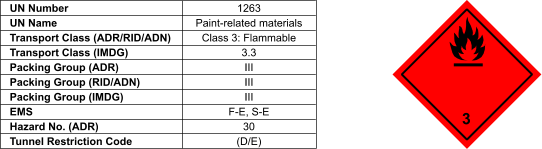
14. TRANSPORT INFORMATION
15. REGULATORY INFORMATION
Statutory Instruments
Control of Substances Hazardous to Health.
Approved Code Of Practice
Safety Data Sheets for Substances and Preparations. Classification and Labelling of Substances and
Preparations Dangerous for Supply.
Guidance Notes
Workplace Exposure Limits EH40.
EU Legislation
Regulation (EC) No 1907/2006 of the European Parliament and of the Council of 18
th
December 2006
concerning the Registration, Evaluation, Authorisation and Restriction of Chemicals (REACH), establishing a
European Chemicals Agency, amending Directive 1999/45/EC and repealing Council Regulation (EEC) No 793/93
and Commission Regulation (EC) No 1488/94 as well as Council Directive 76/769/EEC and Commission
Directives 91/155/EEC, 93/67/EEC, 93/105/EC and 2000/21/EC, including amendments. Regulation (EC) No
1272/2008 of the European Parliament and of the Council of 16
th
December 2008 on classification, labelling and
packaging of substances and mixtures, amending and repealing Directives 67/548/EEC and 1999/45/EC, and
amending Regulation (EC) No 1907/2006.
National Regulations
Control of Substances Hazardous to Health Regulations 2002 (as amended) The Carriage of Dangerous
Goods and Use of Transportable Pressure Equipment Regulations 2009 ("CDG 2009"), SI 2009 No 1348.
6. OTHER INFORMATION
Abbreviations:
N/A not applicable. ND not determined. NR not regulated.
ADR: European agreement concerning the international carriage of Dangerous goods by road.
CAS International reference numbers for chemical substances. (Chemical Abstracts Service)
CHIP: Chemicals (Hazard Information and Packaging) Regulations 1993, and later revisions.
DNEL: Derived No-Effect Level.
EINECS: European Inventory of Existing commercial Chemical Substances.
GHS: Globally Harmonized System of Classification and Labelling of Chemicals.
HSE EH40: H.S.E. Guidance note EH40 on Occupational Exposure Limits (revised annually), to be used in
conjunction with the COSHH regulations.
IMDG: International Maritime code for Dangerous Goods.
IC50: Inhibition Concentration, 50 percent.
LC50: Lethal Concentration, 50 percent.
LD50: Lethal Dose, 50 percent.
PBT: Persistent Bioaccumulative Toxic.
PNEC: Predicted No-Effect Concentration.
RID: Regulation Concerning the International Transport of Dangerous Goods by Rail.
STEL: Short Term Exposure Limit.
TWA: Time Weighted Average.
vPvB: Very Persistent and Very Bioaccumulative.
WEL: Workplace Exposure Limit.
Example Label using information from Section 2.2
Hazard Statements From Section 2.1 and 3 in Full
H226
Flammable liquid and vapour.
H312
Harmful in contact with skin.
H315
Causes skin irritation.
H317
May cause an allergic skin reaction.
H332
Harmful if inhaled.
Updated: May 2018


Polybond Ltd, Unit 6, William Street, Northam, Southamton, Hampshire, SO14 5QH, United Kingdom
Tel: 02380 988350 Fax: 02380 988355 sales@polybond.co.uk